Video slots have become one of the most recognizable forms of casino entertainment in the United Kingdom. They can be found in traditional casinos, bingo halls, adult gaming halls and other licensed premises, while thousands of digital versions are available through licensed online gambling operators.
Although online and land-based video slots share the same basic idea – spin reels, match symbols and potentially win prizes – the experience can be remarkably different. Online slots can offer hundreds of paylines, elaborate bonus rounds, progressive features and immersive graphics, while physical machines provide the atmosphere and immediacy of playing in a real-world gambling venue.
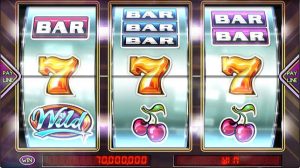
The UK is also a highly regulated gambling market. The rules governing a slot played on a smartphone are not necessarily the same as those applying to a machine in a casino near me, betting shop, pub or bingo venue. Understanding these differences is important for anyone interested in video slots in Britain.
What Are Video Slots?
A video slot is a reel-based gambling game that uses digital graphics rather than traditional mechanical reels. The player selects a stake and starts a game cycle, with symbols appearing on reels to determine whether a winning combination has been created.
Modern video slots can be extremely sophisticated. A single game might feature five or more reels, hundreds of ways to win, wild symbols, scatters, multipliers, free-spin rounds, jackpots and interactive bonus games.
The basic concept remains simple, however: the outcome of each game is determined by the gambling system behind the machine or software.
The term “video slot” is often used to distinguish modern digital reel games from older mechanical fruit machines. In the UK, the words slot, fruit machine, gaming machine and casino game can overlap in everyday conversation, although they can have different meanings under gambling regulations.
The UK Gambling Commission defines an online slots game as a reel-based casino game played online.
Online Video Slots in the UK
Online video slots have transformed the way British players access casino games.
Instead of visiting a casino or gaming venue, customers can access video slot games through an internet-connected computer, tablet or smartphone. The game is hosted by an online gambling operator and played through its website or application.
The variety is enormous. Online casinos can offer games inspired by:
- Ancient Egypt
- Mythology
- Adventure and exploration
- Classic fruit machines
- Movies and television
- Fantasy VideoSlots
- Sports
- Treasure hunting
- Luxury lifestyles
- Traditional casino themes
Many modern games are designed around entertainment features rather than simply displaying reels. A slot might begin with five reels but then introduce additional reels, expanding symbols, cascading wins or bonus levels during a feature.
Mobile Video Slots
Mobile devices have become particularly important to online slot gaming.
A modern smartphone can run sophisticated slot games without requiring specialist software. Responsive game design allows the reels, buttons and information panels to adapt to smaller screens.
Mobile slots commonly feature touch controls, simplified menus and landscape or portrait layouts.
This convenience is one of the fundamental differences between online and land-based slots. A physical machine requires the player to be in a particular location, whereas an online game can generally be accessed wherever the operator is legally permitted to provide its service.
UK Rules for Online Slots
Online slots in Great Britain are subject to specific regulatory requirements.
One of the most significant recent changes was the introduction of maximum stake limits for online slots. The £5 maximum stake for adults aged 25 and over came into effect on 9 April 2025, while a £2 maximum stake applies to adults aged 18 to 24 from 21 May 2025.
Online slots must also follow technical requirements governing how games operate.
For example, the Gambling Commission’s rules require a minimum period of 2.5 seconds between the start of one remote slot game cycle and the point at which the next cycle can commence.
These rules are part of a broader regulatory approach designed to make online gambling products operate within defined technical and consumer-protection standards.
The Growth of Online Slots
Official Gambling Commission figures demonstrate the enormous scale of online slots in Great Britain.
For the January to March 2026 period, the Commission reported online slots Gross Gambling Yield of £773 million among the largest online operators covered by its market-impact dataset. Slots GGY was up 12% year-on-year, while the number of spins increased by 7% to 25.1 billion.
The dataset also recorded 4.8 million average monthly active accounts playing online slots during the period.
These figures demonstrate that online slots remain a major part of the British gambling market.
It is important to note that the Commission’s operator dataset covers the largest online operators rather than every gambling business, so the figures should not automatically be interpreted as the complete size of the entire UK online slots market.
Land-Based Video Slots
Land-based video slots offer a very different environment.
Instead of playing through a browser or mobile application, the player sits or stands in front of a physical gaming machine. The cabinet contains a screen, controls and the hardware necessary to operate the game.
Depending on the venue and machine category, the experience can range from relatively simple fruit-machine-style games to sophisticated casino gaming terminals.
Traditional venues where gaming machines can be found include:
- Casinos
- Betting shops
- Bingo premises
- Adult gaming centres
- Pubs and other licensed premises
- Members’ clubs
- Family entertainment centres
The exact machines permitted depend on the category of machine and the type of premises.
Understanding UK Gaming Machine Categories
One of the most important differences between online and land-based slots is the regulatory classification system.
The Gambling Commission divides gaming machines into categories A, B, C and D, with Category B divided into several subcategories. The categories are primarily determined by the maximum stake and maximum prize available.
For example, Category B1 machines are permitted in casinos and currently have a maximum stake of £5 and a maximum prize of £10,000, with an option for a linked progressive jackpot of up to £20,000 on a premises basis.
Category B2 machines, historically known as fixed-odds betting terminals, have a maximum stake of £2 and a maximum prize of £500. They can be found in certain casinos, betting shops and tracks.
Category B3 machines also have a maximum £2 stake and £500 maximum prize and can be found across several types of gambling premises, including casinos, bingo premises and adult gaming centres.
Category B4 machines have a £2 maximum stake and £400 maximum prize. They are permitted in a range of locations including bingo premises, adult gaming centres, clubs, betting shops and casinos.
Category C machines are particularly familiar to people who have encountered fruit-machine-style games in pubs. They have a maximum £1 stake and £100 maximum prize and can be located in places including pubs, bingo premises, adult gaming centres and casinos.
Category D covers lower-stake machines, including certain fruit-machine-style games, coin pushers and crane machines. Different Category D configurations have different stake and prize limits.
Online Slots Versus Physical Slot Machines
While both types of games use similar principles, there are substantial differences.
Convenience
Online slots are accessible remotely, subject to the operator being legally permitted to offer gambling to the customer.
Land-based machines require physical travel to a licensed venue.
Game Selection
An online casino can host a very large catalogue of games. Players can move between different titles almost instantly.
A physical venue has limited floor space, so the number of machines is naturally restricted.
Atmosphere
Land-based slots offer a social and physical environment. Players can see other customers, hear machines operating and interact with casino or venue staff.
Online slots are much more private and personal.
Technology
Online games can be updated relatively quickly, while physical machines involve dedicated hardware, cabinets and venue installations.
Modern land-based machines can nevertheless be highly advanced and may incorporate large screens, sophisticated graphics, linked jackpots and networked systems.
Slot Themes and Game Design
One reason video slots remain popular is the enormous variety of themes.
Classic fruit machines traditionally relied on symbols such as cherries, bells, bars and sevens. Modern video slots can build entire stories around their themes.
A game might take players through an Egyptian tomb, a pirate island or a fantasy kingdom.
Some titles use licensed entertainment properties, while others rely entirely on original characters and artwork.
The design is not simply cosmetic. Game developers use animation, sound effects and bonus mechanics to create a more interactive experience.
Common features include:
Wild Symbols
A wild symbol can substitute for other symbols to help create winning combinations, depending on the individual game’s rules.
Scatter Symbols
Scatter symbols can trigger special features without necessarily requiring them to appear on a conventional payline.
Free Spins
Free-spin features provide a predetermined number of additional spins under the conditions defined by the game.
Multipliers
Multipliers can increase a qualifying win by a specified factor.
Cascading Reels
Instead of stopping after a winning combination, symbols may disappear and be replaced by new symbols, allowing another winning combination to form.
Bonus Games
Some video slots contain separate interactive bonus rounds with their own mechanics.
The exact rules vary from game to game, so players should always examine the game’s information panel before playing.
Return to Player and Volatility
Two terms frequently appear when people compare slot games: RTP and volatility.
RTP stands for Return to Player. It represents a theoretical long-term average return under the mathematical model of a particular game.
For example, a hypothetical slot with a theoretical RTP of 96% is designed so that, over a sufficiently large number of game cycles, approximately £96 would be returned for every £100 wagered, before considering the individual player’s results.
That does not mean a player who spends £100 should expect to receive £96 back.
Short-term results can be dramatically different.
Volatility describes the distribution of wins. A higher-volatility game may produce less frequent but potentially larger wins, while a lower-volatility game may produce smaller wins more frequently.
RTP and volatility should therefore not be confused.
Progressive Jackpots
Progressive jackpots are another major feature associated with some video slots.
A progressive jackpot can increase as additional bets are made, depending on how the particular jackpot system operates.
Some land-based machines can participate in linked jackpot systems across multiple machines or even multiple venues.
Online casinos can also offer networked progressive jackpots, where qualifying games contribute to a larger prize pool.
However, progressive jackpots are not a guarantee of winning. The probability and qualifying conditions depend entirely on the individual game’s rules.
The Social Side of Land-Based Slots
One advantage of physical gambling venues is the atmosphere surrounding the machines.
A casino visit can be part of a larger evening that includes table games, restaurants, entertainment or social activities.
Bingo halls and adult gaming centres can also provide environments where customers interact with other people.
A physical machine is therefore more than just a game displayed on a screen. It is part of a venue and a broader entertainment experience.
Online gambling provides almost the opposite environment. A player can sit alone at home and access games immediately.
Neither environment should be confused with a guaranteed way to make money. Slot outcomes are determined by the game’s underlying gambling system, and individual sessions can produce losses.
The Future of Video Slots in Britain
Technology is likely to continue changing both online and land-based slots.
Online developers can experiment with more sophisticated graphics, animation and game mechanics. Mobile devices are becoming increasingly capable, making it possible to create experiences that previously required a desktop computer.
Land-based manufacturers are also developing larger displays, improved interfaces and increasingly sophisticated cabinets.
Another important development is the continued integration of responsible-gambling technology.
Online operators can use account-level controls and monitoring systems, while regulators continue to introduce requirements intended to address gambling-related risks.
The regulatory environment is therefore likely to remain an important part of the future of British slot gaming.
Video Slots and Responsible Gambling
Slots are gambling products rather than investments.
A player cannot reliably predict when a particular machine or online game will produce a winning combination. Previous results do not create a requirement for the next spin to win.
A sensible approach is to treat gambling expenditure as entertainment money rather than money that is expected to generate a financial return.
Players should also understand the rules of the specific game before playing, including its stake options, winning combinations, bonus features and theoretical RTP where provided.
Anyone who finds that gambling is becoming difficult to control can seek independent support and consider using the tools offered by licensed gambling operators.
Online and Land-Based Slots Are Evolving Together
The distinction between online and land-based video slots is becoming less straightforward as technology develops.
A modern casino machine can look and feel similar to an online slot, while an online game can reproduce the appearance of a traditional physical machine.
Yet regulation, accessibility and the surrounding experience remain different.
Online slots provide convenience, enormous game libraries and immediate access through computers and mobile devices. Land-based slots provide physical interaction, venue atmosphere and the social experience associated with visiting a gambling premises.
Both forms occupy an important place in the British gambling landscape.
Conclusion
Video slots have travelled a long way from the mechanical fruit machines that once dominated gaming floors.
Today’s UK player can encounter slot games in a casino, pub, bingo hall, adult gaming centre or online casino. The underlying concept remains familiar – reels, symbols, stakes and potential prizes – but modern technology has transformed the way these games look and operate.
The British regulatory framework also creates important distinctions between online slots and land-based gaming machines. Online slots are subject to specific remote-gambling requirements, including maximum stake rules introduced in 2025, while physical machines are classified into categories with different permitted stakes, prizes and locations.
The latest Gambling Commission figures show that online slots continue to represent a substantial part of the regulated gambling market. In the year to March 2026, Great Britain’s gambling industry generated £17.5 billion in Gross Gambling Yield across the customer-facing gambling industry, while the remote casino sector accounted for £5.7 billion.
For players, the key difference is ultimately the experience: online video slots emphasise accessibility and variety, while land-based machines combine slot gaming with the atmosphere of a physical venue.
Whichever format is used, understanding the game’s rules, the applicable stake limits and the nature of gambling outcomes is essential. Video slots can provide entertainment, but their results remain uncertain, and responsible play is an important part of the modern UK gambling environment.